
The Architecture of the Day for Highly Sensitive Children (Ages 0–6)
The Architecture of the Day
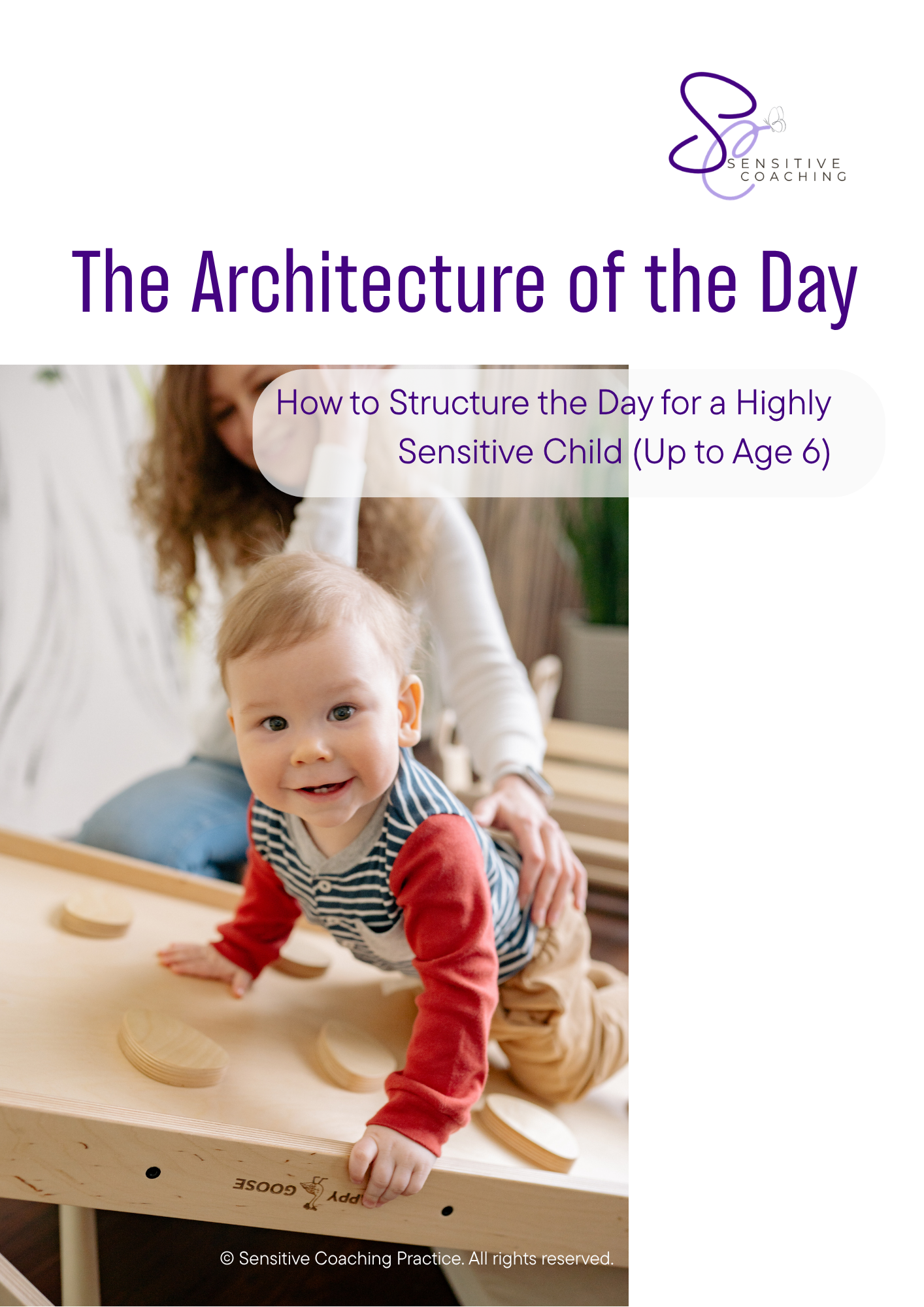
How to Structure the Day for a Highly Sensitive Child (Up to Age 6)
How to build a daily rhythm for a highly sensitive child that means fewer emotional outbursts and more predictability and calm. Traditional parenting methods often don't work here — because an HS child doesn't need discipline, they need an architecture of the day that actually fits them.
A comprehensive 40-page PDF, in a handy mobile-friendly format.
Does your child protest against rigid schedules, react sharply to the smallest change of plan, or melt down after a perfectly ordinary walk? That's not defiance — it's the nature of a nervous system running at "maximum volume." Traditional parenting methods often don't work here, because a highly sensitive child doesn't need discipline. They need architecture.
Who this guide is for:
Parents of children up to age 6 whose "basket of impressions" fills up faster than they can empty it.
Anyone who wants to put an end to daily battles over food, hygiene, and the transition from play to rest.
Mothers and fathers longing for a predictable day — one with room for their child's development, and a few moments of quiet for themselves too.
What's inside the guide (4 core modules, plus valuable bonuses):
Rhythm instead of a schedule: How to build a sequence of steps that gives your child a sense of control and safety — with no pressure from the clock.
Sensory diet & daily life: The secrets of "quiet time," navigating noisy playgrounds, and practical fixes for hygiene battles (bath time, nail trimming, hair washing).
The sensory kitchen & change management: How to support picky eaters (HSS types included) and introduce change without setbacks or stress.
The resource lighthouse & connection: Emotional "refueling stops" for your child, and somatic self-regulation tools for you (including the RAIN practice).
The result: Instead of constantly "putting out fires," you'll have a system that's clear and still flexible. Your child feels safe, and you can finally breathe — knowing you're responding to their needs, and doing it right.
)